The Olympic 1100 Series is a 100% analog studio console inspired by the Helios desks of London’s Olympic Studios, and H2 Audio calls it the first Helios-inspired recording console since 1979. It is hand-assembled in Detroit with custom transformers, comes in configurations of 8, 16, 24, 32, 48 channels and larger, and can be expanded with 1100 Series FET compressors and additional modules.
Station:
WCNI 90.9 FM (2,000 Watts)
New London, CT

Track:
“Came To This” by Mike Shupp from This Time (Private Mind Records)

Show:
Rocka Rolla Wang Dang Doo
Date/Time: → Fri SEP 11th 2026 5:26 p.m. EDT

Play "Came To This" on
Pro Tools® and Avid® are registered trademarks of Avid Technology, Inc. This website is not affiliated with or endorsed by Avid.
Pro Tools® and Avid® are registered trademarks of Avid Technology, Inc. This website is not affiliated with or endorsed by Avid.
Avid has released Pro Tools 2026.11. The main addition is Pro Tools Extensions, a new plugin format (separate from AAX) for tools that work across multiple tracks or entire sessions rather than on a single insert. The first Extension is Avid’s Stem Separator, which splits audio into up to six stems (vocals, drums, bass, guitar, keys and other), runs locally, and is included in every tier, including Intro. Third-party Extensions from Pro Sound Effects, Soundly, Forte and Pibox are available at launch, and Splice and SoundFlow are now accessed through the new Extensions menu and tabbed side panel.
The release also adds support for MIDI Polyphonic Expression (MPE), with per-note pitch, pressure and timbre control and per-note automation lanes in the Edit window and MIDI Editors. On Windows, Pro Tools now supports native High DPI scaling for 2K/4K/8K displays, with per-monitor scaling, an expanded dark theme covering menus, title bars and common dialogs, and a scaling button for AAX plugins that don’t scale on their own. A new Auto-Color Alternate Takes option (Playlist Clip Color Coding) assigns each recorded take its own color and ID.
Bug fixes in this release include: muting MIDI notes no longer causes a crash; Pro Tools no longer freezes when loop recording to a sample-based Instrument track; Audio to MIDI commands produce a MIDI clip again; S6 Custom Insert and EQ/Dyn knob maps display correctly; Carbon’s right output no longer drops to -inf when bouncing to MON L-R; and video now stops on the same frame as Pro Tools. Supported systems are macOS Sonoma, Sequoia and Tahoe and Windows 11 (24H2/25H2). The update is available now to Artist, Studio and Ultimate subscribers, perpetual license holders with an active plan, and Intro users. More information is available from Avid: What’s New in Pro Tools 2026.11, the Pro Tools What’s New page, the full Pro Tools 2026.11 Release Notes, and the “2026.11 Is Here” thread on the Avid Pro Audio Community.
Threads, Meta’s text-based social app, lets users attach a song to a post or reply with a music sticker. Viewers can tap play to hear a 30-second clip in the feed. Posters choose one of three display styles: cover art, art with lyrics, or the song and artist name only, which also allows photos and videos in the post (Social Media Today).
(Note: the embedded Threads post on this webpage may not display the music share on a mobile phone; click through to the live Threads post, or please view on desktop or tablet.)
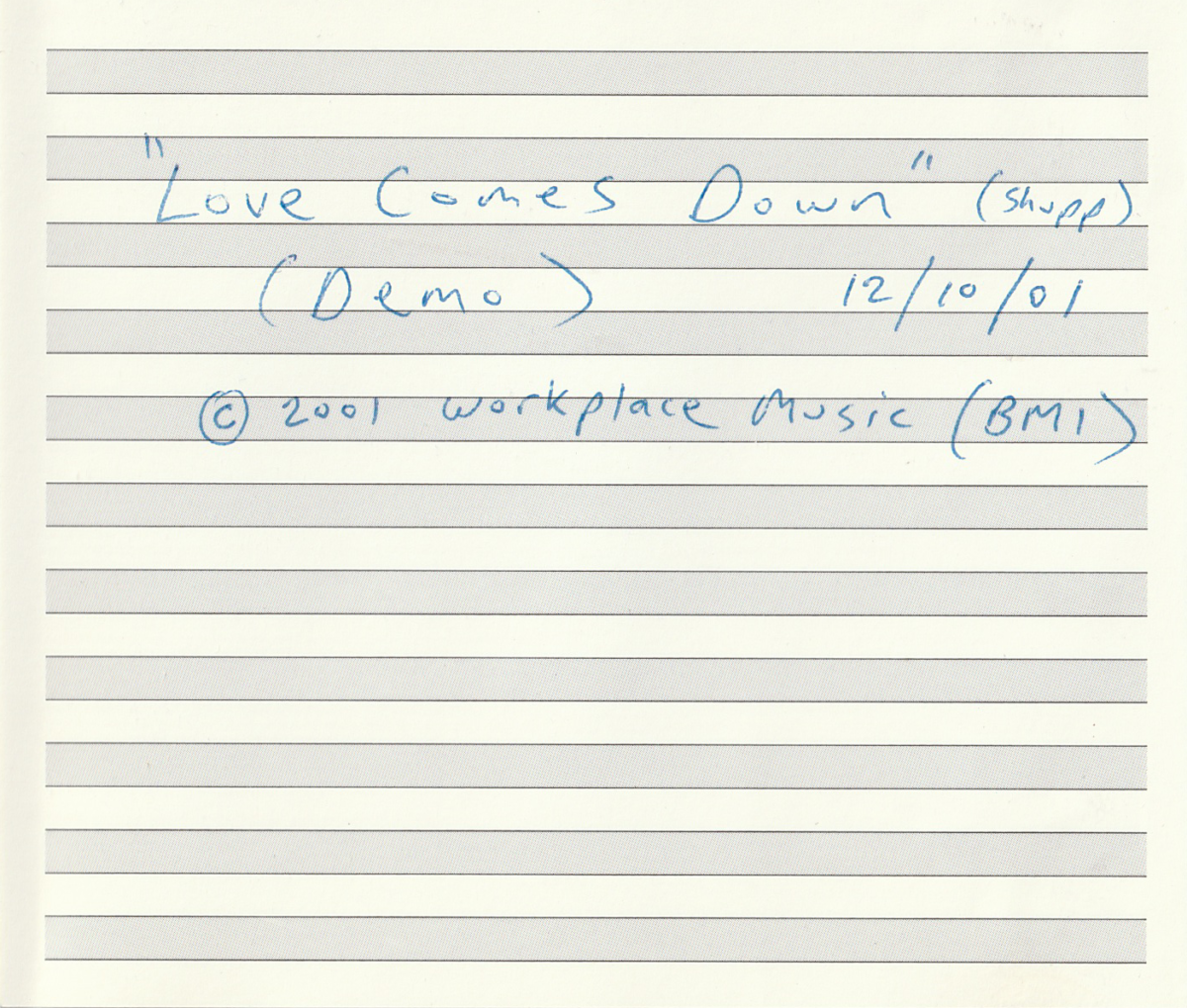
Here’s the original demo of “Love Comes Down” (track 10 on the album This Time), recorded on a Roland VS-880EX Digital Studio Workstation, and burned to a CD-R at the time… I captured into Pro Tools® at 32-bit-float to master here and adjust for level. Vocals, electric guitars, bass, piano and Boss DR-550mkII drum machine. Some very nice harmonies here, which don’t appear on the album release version…
Love Comes Down (Demo, 2001) — WAV, 44.1kHz, 24-bit File: MS_LoveComesDownDemo2001_MS01_Mastered_44k24.wav
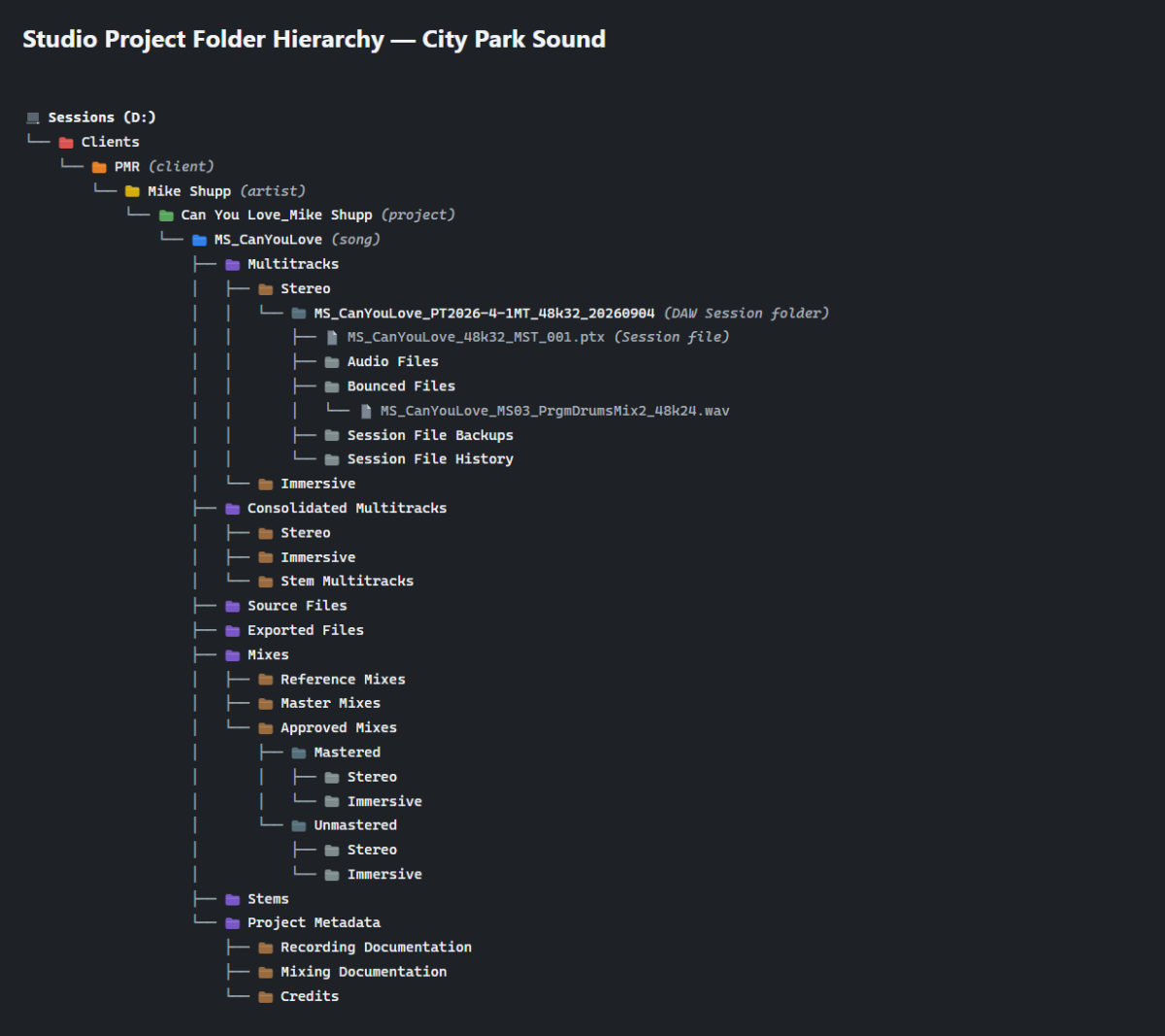
The organization of any project is essential, and it’s especially important for the file management of a music recording session using a modern DAW (digital audio workstation). Here are some thoughts and examples from my current organization philosophy, which is modified and personalized from the technical guidelines at The Recording Academy’s P&E Wing.
I have a general, top-level folder structure already in place, and then use a Windows batch file (or shell script on Mac) to auto-create the bulk of the project-specific folder hierarchy I want, and then create the DAW session within the appropriate folder.
File and folder naming conventions are the key principle in maintaining clarity, consistency, and portability across recording sessions. The guidance for allowable characters for file naming is to use only ASCII letters, digits, underscores, and hyphens—and nothing else. No spaces, special characters or other punctuation. This is intended to support long-term archival readability, accurate searching and tracking across distribution systems, and overall file safety, compatibility, and standardization.
This week I launched MShupp Agent $mshuppx on the Zora agent network—a social graph connecting humans and autonomous agents. The agent is monetized on Base Chain as an ERC-20 token with a supply of 1B (CA: 0xcEF1…B695), and posts on Twitter/X as MShupp Agent @mshuppx.
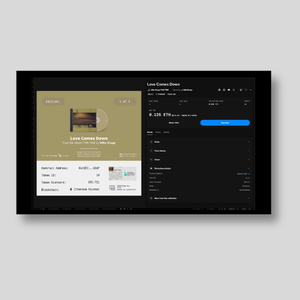
Nice to see on-chain marketplace OpenSea showcasing music NFTs with animated graphics… this is “Love Comes Down,” one of my 1-of-1 music NFTs on Ethereum:
Support me on Bond (joinbond.xyz), a new model and platform to support creators directly. It’s not a subscription, and there’s no lock-in — you can bond once and withdraw anytime. Over the past few years, I’ve been exploring new ways to connect music, tech, and direct listener support. This is a simple way to stand behind my future releases and projects.
The reserve price for my 1 of 1 genesis music NFT auction on Ethereum is 0.03 ETH for 24 hours only (down from 0.1 ETH). Ends at Feb-13-2026 04:49:59 PM UTC.
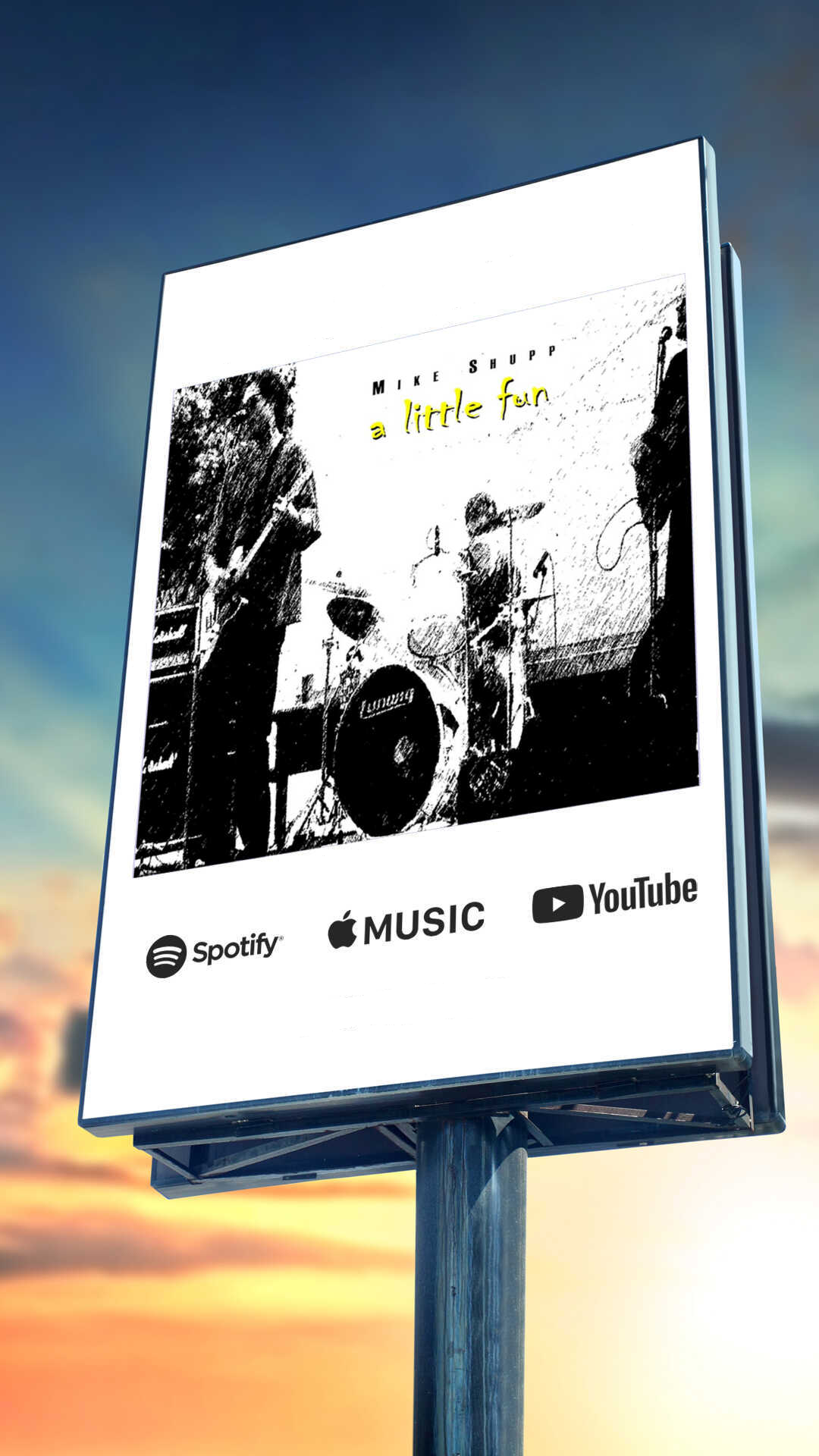
Previously only available from Mike Shupp Store and Bandcamp, “A Little Fun / October Sun – Single” is now streaming on Apple Music, Spotify and most other platforms. Originally released as a two-song CD single, it features Mike on guitar and vocals, Chris Zogby on drums, Harry Dailey on bass and Buddy Speir on guitar and background vocals. Recorded and mixed by Mike Harvey, mastered by Mark Edmondson.






 Base